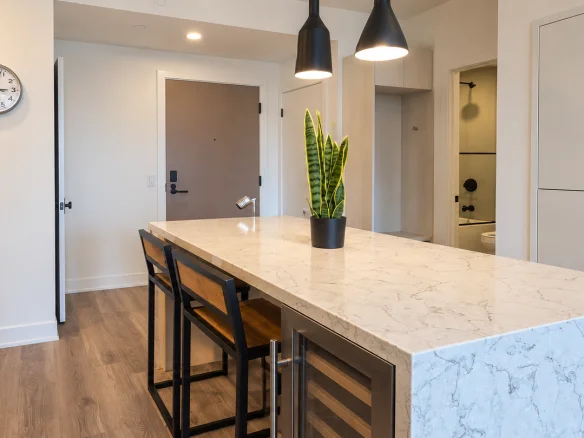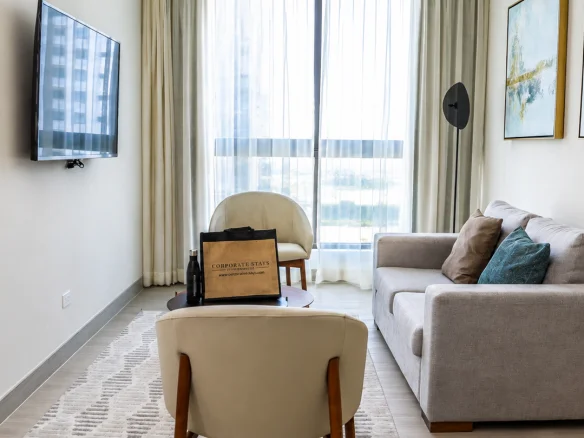
A turnkey investment property offers international investors a faster path from acquisition to rental operations. Instead of buying an empty unit, managing renovations, purchasing furniture, hiring contractors, and building an operating system, the investor acquires a property prepared for its intended rental strategy.
However, “turnkey” is not a regulated promise of profitability. The term may describe anything from a renovated, tenant-ready apartment to a fully furnished property supported by professional hospitality operations. Understanding exactly what is included and how the projected income was calculated is essential before investing.
A turnkey investment property is a rental asset prepared for operation at purchase. Depending on the offer, it may be renovated, furnished, licensed, tenant- or guest-ready, and paired with professional management. The investor owns the real estate but delegates setup and daily operations. “Turnkey” describes readiness not guaranteed income or low risk.
What Does Turnkey Real Estate Mean?
The general meaning of a turnkey solution is something ready for immediate use without significant modifications. In real estate, the definition depends on the investment model.
A basic turnkey property may include:
- Completed construction or renovation
- Essential appliances and fixtures
- Compliance with applicable building requirements
- A property manager available after closing
A more complete hospitality-grade model may also include:
- Furniture, linens, kitchen equipment, and décor
- Professional photography and listing setup
- Guest screening and communication
- Cleaning and maintenance systems
- Distribution across suitable booking channels
- Dynamic pricing and revenue management
- Financial and operating reports
In CS Realty’s context, turnkey real estate means more than purchasing a finished apartment. The objective is to provide an operational, income-producing property supported by Corporate Stays’ hospitality infrastructure. Investors can review this approach through the CS Realty investment platform.
How a Turnkey Investment Property Works
The process typically begins with property selection. The provider identifies or develops an asset suited to a defined rental market, prepares it for operation, and establishes the systems needed to attract and serve occupants.
The investor then purchases the property and enters into an operating or management agreement when applicable. The operator may handle pricing, marketing, reservations, guest support, cleaning, maintenance, rent collection, and performance reporting.
The owner still retains important responsibilities. These may include approving major capital expenses, maintaining insurance, monitoring reports, meeting tax obligations, and deciding when to refinance or sell.
“Hands-free” should therefore mean reduced day-to-day involvement—not a complete absence of oversight.

Turnkey Property vs. a Traditional Rental
Neither option is automatically better. The right choice depends on the investor’s experience, location, available time, and desired level of control.
| Factor | Turnkey investment property | Traditional rental purchase |
|---|---|---|
| Condition at purchase | Prepared for the intended rental strategy | May require repairs, furnishing, or renovation |
| Time to launch | Potentially shorter | Depends on the work required |
| Owner involvement | Lower when professional management is included | Often higher during setup and leasing |
| Upfront price | May include a preparation or operating premium | Lower price may exclude setup costs |
| Operational control | Shared with or delegated to an operator | Greater direct control |
| Main risk | Dependence on provider assumptions and management quality | Renovation, leasing, and execution risk |
| Income | May begin sooner, but occupancy is not guaranteed | Usually begins after setup and tenant placement |
The comparison should use the total cost of making each property operational—not only the advertised purchase price.
How to Measure Turnkey Property Performance
A polished apartment is not necessarily a strong investment. Investors should evaluate the income model, recurring costs, demand drivers, and operating results.
For furnished and hospitality-style properties, useful metrics include:
- Occupancy: The percentage of available nights sold.
- Average daily rate (ADR): Rental revenue divided by occupied nights.
- Revenue per available room (RevPAR): Rental revenue divided by all available nights.
- Average length of stay (ALOS): Total occupied nights divided by the number of completed stays.
- Net operating income (NOI): Revenue remaining after recurring operating expenses but before financing, income tax, and depreciation.
The STR Benchmark glossary provides standard definitions for occupancy, ADR, and RevPAR. These metrics should be reviewed together. A property can achieve high occupancy by discounting heavily while producing weak RevPAR and net income.
An Illustrative Yield Calculation
Assume an investor is considering the following hypothetical property:
| Item | Illustrative amount |
|---|---|
| Purchase price | $250,000 |
| Closing, legal, and acquisition costs | $10,000 |
| Total cash invested | $260,000 |
| Annual rental revenue | $36,000 |
| Operating expenses and reserves | $18,000 |
| Net operating income | $18,000 |
Based on these assumptions:
- Gross yield: $36,000 ÷ $260,000 = 13.8%
- Net yield: $18,000 ÷ $260,000 = 6.9%
These figures are illustrative, not a market forecast or guaranteed return. The calculation excludes financing, income taxes, currency movements, appreciation, and selling costs. Investors should also request a detailed breakdown of management fees, utilities, maintenance, insurance, property taxes, association fees, booking commissions, and replacement reserves.
If you want help evaluating property-specific assumptions, Book a 20-Min Call with Our Investment Team.
Why Investors Consider Turnkey Properties
The main benefit is operational compression: several steps that normally occur after acquisition are completed before or alongside the purchase.
This may offer investors:
- A shorter path to market
- Fewer renovation and furnishing decisions
- Local operating support
- More consistent guest or tenant service
- Professional pricing and distribution
- Centralized maintenance coordination
- Clearer performance reporting
- Easier remote ownership
These benefits can be especially relevant for investors buying outside their home country. Managing contractors, regulations, vendors, and guests across borders can turn a seemingly passive asset into a demanding second business.
The trade-off is that investors may pay a premium and give up some operational control. That premium is worthwhile only when the property, setup, management, and projected performance justify it.
Risks and Due Diligence Considerations
A turnkey label should begin the investigation—not end it. Before purchasing, review the following areas.
1. Independent valuation
Compare the asking price with similar properties and obtain an independent valuation when practical. The International Valuation Standards Council emphasizes transparent valuation methods, appropriate data, documented assumptions, and clear reporting.
2. Title and legal structure
Confirm ownership, liens, boundaries, permits, foreign-buyer rules, condominium restrictions, and the legal entity through which the property will be held. Use qualified local legal counsel rather than relying only on the seller’s representatives.
3. Physical condition
Commission an independent inspection. Review major systems, appliances, furniture condition, warranties, safety requirements, and anticipated capital expenditures.
4. Demand assumptions
Ask what drives demand: corporate travel, relocation, tourism, government activity, healthcare, education, or long-term residential needs. Review seasonality and competing supply rather than relying on a single annual occupancy estimate.
5. Operating history
For an existing rental, request monthly revenue, occupancy, ADR, expenses, cancellations, maintenance costs, and owner statements. For a new property, treat projections as estimates and test lower-rate and higher-vacancy scenarios.
6. Management agreement
Review the fee structure, contract term, termination rights, spending authority, owner-use restrictions, reporting schedule, reserve requirements, and responsibility for damage or unpaid balances.
7. Taxes and accounting
Tax treatment depends on the property’s jurisdiction and the investor’s residence. For example, the U.S. IRS Publication 527 for 2025 identifies expenses such as maintenance, insurance, management fees, repairs, taxes, utilities, interest, and depreciation for U.S. residential rental reporting. Cross-border investors should obtain advice covering both countries.
8. Marketing claims
Be cautious when a provider emphasizes returns but offers limited documentation. Investor.gov identifies promises of high returns with little or no risk, pressure to act quickly, and fake testimonials as common warning signs.
Other risks include currency movements, regulatory changes, economic downturns, operator underperformance, unexpected capital expenses, and limited resale liquidity.

The CS Realty Turnkey Model
CS Realty approaches turnkey ownership as an asset-management and operating challenge, not simply a property transaction. Its model combines selected furnished real estate opportunities with hospitality-grade operations supported by Corporate Stays.
The goal is to align the physical asset with professional pricing, guest service, maintenance, distribution, and revenue monitoring. This can reduce the operational burden for international owners, but every opportunity still requires property-specific analysis and independent due diligence.
Frequently Asked Questions
Is every turnkey property fully furnished?
No. Some are renovated and tenant-ready but unfurnished. Others include furniture, equipment, operating systems, and management. Request a written inventory and scope of services before purchasing.
Is a turnkey investment completely passive?
It can be more hands-off than self-management, but no direct property investment is entirely passive. Owners should review reports, monitor the operator, maintain reserves, and make financing or exit decisions.
Is paying a premium for turnkey real estate worthwhile?
It may be when the premium reflects quality renovations, durable furnishings, faster deployment, proven systems, and capable management. Compare the price with the full cost and time required to prepare a conventional property yourself.
Does income begin immediately after closing?
Not necessarily. “Income-ready” means the property can enter operation without major additional work. It does not guarantee immediate bookings, full occupancy, or positive cash flow.
Can international investors buy turnkey properties in Latin America?
Often, but ownership rules, financing, taxes, registration procedures, and rental regulations vary by country and property type. Investors should obtain local legal and tax advice before committing funds.
Is a Turnkey Investment Property Right for You?
A turnkey investment property can suit investors who want direct real estate ownership without building an overseas rental operation from the ground up. Its value comes from the combined asset, setup, management system, and demand strategy not from the label alone.
Judge each opportunity by its all-in cost, realistic net income, operator quality, legal position, capital needs, and exit options. When those elements align, a turnkey model can provide a practical route to professionally managed, income-producing real estate.
Ready to evaluate a specific opportunity? Book a 20-Min Call with Our Investment Team to discuss your objectives, preferred markets, and due-diligence requirements.