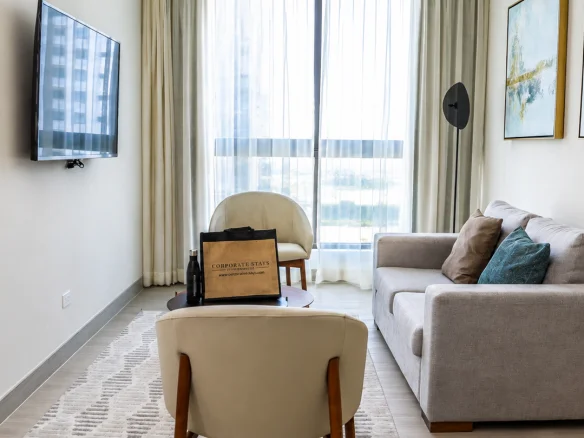
Direct answer: A hands-free real estate investment lets you own property while a professional team manages leasing, guests, maintenance, and reporting. To evaluate one, compare Latin American markets, underwrite net returns, review the management agreement, verify legal ownership and rental permissions, and plan an exit before you buy.
What Is a Hands-Free Real Estate Investment?
A hands-free real estate investment is a directly owned property whose routine operations are delegated to a full-service manager. Depending on the rental model, the operator may handle furnishing, marketing, pricing, bookings or leasing, collections, guest or tenant support, cleaning, inspections, maintenance, and owner reporting.
What hands-free really means
The investor still approves the plan and major expenses, maintains reserves and insurance, reviews performance, and decides when to refinance, change strategy, or sell. Hands-free means freedom from daily property operations, not freedom from ownership decisions or investment risk.
Professional management does not guarantee occupancy, rental income, appreciation, or a fast resale. It changes who performs the work; it does not eliminate the need for due diligence.
The Hands-Free Real Estate Investment Process
1. Define the Investment Mandate Before Choosing a Property
Start with the result you want the property to produce. Clarify whether income, capital growth, diversification, personal use, or a mix is the priority. Set the total acquisition budget, minimum acceptable net return, maximum tolerable loss, expected holding period, reporting currency, and level of owner oversight.
This mandate becomes your filter. An investor seeking income and limited involvement may prefer a completed unit with established demand and management in place. An appreciation-focused buyer may accept construction or lease-up risk, but that is a different strategy.
2. Choose a Country, City, and Demand Base
Latin America is not one real estate market. Ownership rules, currencies, taxes, rental regulations, financing, construction standards, and resale liquidity vary by country. Performance can also differ sharply between neighborhoods in the same city.
Look for several demand drivers rather than one optimistic story. These may include corporate activity, logistics, relocation, tourism, universities, infrastructure, and local household formation.
| Market lens | Potential demand to investigate | Country-specific due diligence |
|---|---|---|
| Panama | Corporate travel, logistics, relocation, extended stays, and tourism | Title, building rules, permitted rental use, taxes, insurance, and the property’s exact demand base |
| Paraguay | Business activity, local residential demand, relocation, and extended stays in Asunción | Title, permitted use, local-currency exposure, taxes, building costs, and depth of the resale market |
The U.S. Department of State’s 2025 Panama investment statement says Panama has no specific regulations on land leasing or acquisition by foreign or non-resident investors. It also warns that much land outside Panama City is not titled. National accessibility does not replace property-level title work.
For Paraguay, the 2025 investment statement notes that the country guarantees equal treatment of foreign investors and permits repatriation of capital and profits. Investors should still have independent local counsel verify the proposed ownership structure, title, location-specific limitations, taxes, and transfer process.
These sources are a starting point, not legal advice. The controlling law, registry record, purchase contract, and qualified local professionals should guide the decision.

3. Match the Property to the Rental Strategy
Choose the intended occupant before the unit. A local long-term rental may require a different location, furnishing level, and cost structure than a corporate or extended-stay property.
| Strategy | Operational profile | Questions to test |
|---|---|---|
| Long-term rental | Lower turnover; usually fixed monthly rent | Is local tenant demand deep? Who handles leasing, renewals, collections, and legal notices? |
| Corporate or extended stay | Furnished; flexible stay lengths; service and reporting matter | Are employers, relocation firms, project teams, medical guests, or mobile professionals active nearby? |
| Short stay | Higher turnover; active pricing, cleaning, and guest service | Is the use legal? Does the building permit it? Can net revenue support higher operating costs? |
The highest advertised nightly rate does not necessarily create the best return. Compare collected revenue after vacancy and channel costs, then deduct every required operating expense.
4. Underwrite Net Returns Using the All-In Cost
The most common weakness in a managed property pitch is a return calculated from gross rent and the purchase price alone. A proper analysis starts with the total capital required and ends with cash flow after realistic operating costs.
All-in investment cost may include the purchase price, closing costs, legal and registration fees, furnishing, appliances, setup, initial marketing, financing costs, and the opening reserve.
Cash operating income should account for vacancy, concessions, management fees, association charges, insurance, property taxes, utilities paid by the owner, cleaning, booking commissions, repairs, replacements, and other recurring costs. Financing and income taxes should then be analyzed separately because they depend on the investor and transaction structure.
Net-yield formula
Annual cash operating income ÷ total acquisition and setup cost = net yield
Consider this hypothetical example. It is not a CS Realty projection or a promised return.
| Illustrative annual item | Amount | Assumption |
|---|---|---|
| Purchase, closing, setup, and opening reserve | $198,000 | Total cash basis |
| Gross potential revenue | $32,400 | Before vacancy |
| Vacancy and collection loss | ($3,888) | 12% assumption |
| Effective collected revenue | $28,512 | After vacancy |
| Non-management operating costs | ($8,400) | Illustrative fixed and variable costs |
| Full-service management | ($3,422) | 12% of collected revenue; illustrative only |
| Maintenance and replacement reserve | ($1,620) | 5% of potential revenue |
| Cash operating income | $15,070 | Before financing and income tax |
| Illustrative net yield | 7.6% | $15,070 ÷ $198,000 |
The 7.6% result is only as reliable as its assumptions. Run at least three cases:
Base case
Supported by realistic comparable performance.
Downside case
Lower occupancy or rent, higher costs, and delayed launch.
Break-even case
The minimum revenue needed to cover operations and reserves.
Ask for monthly assumptions rather than one annual average. Seasonality can disappear inside an annual occupancy figure.
5. Complete Independent Legal, Tax, and Property Due Diligence
An operator may coordinate the process, but qualified advisers should represent the investor—not the seller, developer, or manager.
Before signing, verify:
- The owner, chain of title, liens, easements, and claims
- Foreign- and entity-ownership rules
- Zoning, rental permissions, licenses, and building bylaws
- Construction approvals, warranties, and delivery status
- Local and home-country tax obligations
- Insurance and natural-hazard exposure
- Lawful income receipt and fund repatriation
- Contract remedies and estimated resale requirements
International investing also adds currency, liquidity, and legal-remedy risks. The Investor.gov guide to international investing provides a useful general overview, but property investors need country-specific legal and tax advice.
6. Evaluate the Operator and Management Agreement
The operator is part of the investment thesis. A strong property with weak management can underperform, while excellent management cannot rescue a property with no viable demand.
A complete management scope may include:
- Setup, inventory, photography, and launch
- Leasing, booking channels, pricing, and collections
- Tenant or guest screening and support
- Cleaning, inspections, and inventory control
- Preventive maintenance, emergency response, and vendor supervision
- Financial reporting and compliance coordination
Request evidence of local capacity.
Who answers after hours? Who inspects the unit? What data supports the forecast? Ask for a sample owner statement that separates revenue, costs, fees, reserves, and unusual expenses.
The agreement should define fees, spending authority, reserves, reporting, data ownership, insurance, contract length, termination, and transition support. Confirm whether exclusivity limits owner use or a future sale.

7. Launch, Monitor, and Protect the Exit
After closing, request a written onboarding plan covering possession, furnishing, utilities, inventory, marketing launch, inspections, and the first reporting date.
The right performance indicators depend on the rental model. They may include:
- Occupancy and average length of stay
- Average daily rate and revenue per available night
- Effective collected rent
- Operating-expense ratio
- Maintenance and replacement spending
- Cash operating income and net yield
- Variance from the approved budget
- Reserve balance and upcoming capital work
Review trends, not just distributions. High occupancy may still produce weak income if rates were discounted or costs increased.
Plan the exit before acquisition. Identify likely future buyers, comparable sales, transferability of the management agreement, and expected sale costs. A hands-free model does not make real estate liquid.
Risks a Managed Property Investment Cannot Remove
Professional management transfers daily work. It does not transfer every risk.
Market, operator, currency, legal, property, developer, financing, and liquidity risks remain. Demand and values can fall; costs can exceed reserves; rules can change; pre-construction can be delayed; and a sale may take time or require a lower price than expected.
Identify who controls each risk, estimate its financial effect, and decide whether the expected return justifies the exposure.
How CS Realty Supports Hands-Free Ownership
CS Realty combines acquisition support, market analysis, furnishing and setup, and hospitality-led operations. Its fully managed investment platform is designed for direct owners who do not want to build a remote operating team.
Before selecting a specific opportunity, investors can review what a turnkey investment property should include and what passive real estate income actually requires. Current inventory can also be explored through CS Realty’s verified Panama property page and Asunción, Paraguay property page.
Every opportunity should still be judged on its property-level assumptions, legal position, management agreement, reserve plan, and exit options.
Conclusion: Hands-Free Does Not Mean Due-Diligence-Free
A hands-free real estate investment can make direct ownership in Latin America more practical by transferring routine leasing, guest service, maintenance, and reporting to a capable local operator. The strongest opportunities align five elements: a suitable market, a demand-backed property, conservative net-return assumptions, independent due diligence, and an accountable management structure.
The investor’s job is no longer to supervise every repair or booking. It is to choose well, establish controls, review results, and protect the exit.
Ready to Compare Hands-Free Investment Opportunities?
Review suitable markets against your budget, income goals, and preferred level of involvement.
Frequently Asked Questions
Is hands-free real estate the same as passive income?
They are related, but neither means no work or risk. Hands-free describes delegated daily operations. The owner still funds reserves, reviews reports, approves major decisions, and chooses when to sell.
Can foreigners buy real estate in Latin America?
Many Latin American countries allow foreign property ownership, but rules vary by country, property type, location, and ownership structure. Investors should use independent local counsel to confirm title, ownership rules, permitted use, taxes, registration, and fund-transfer requirements for the specific transaction.
What should full-service property management include?
The scope may include leasing or bookings, pricing, collections, occupant support, inspections, cleaning, maintenance, compliance coordination, reporting, and emergency response. Included and excluded services should appear in the agreement.
How should I calculate returns on a managed property?
Start with effective collected revenue after vacancy. Deduct recurring operating costs, management fees, and a realistic maintenance and replacement reserve. Divide the resulting cash operating income by the total acquisition and setup cost. Analyze financing, taxes, and currency effects separately.
Is Panama or Paraguay better for a managed property investment?
Neither is automatically better. The answer depends on the city, neighborhood, property, renter segment, entry price, currency exposure, legal structure, operating costs, management capacity, and resale plan. Compare property-level base, downside, and break-even cases before deciding.