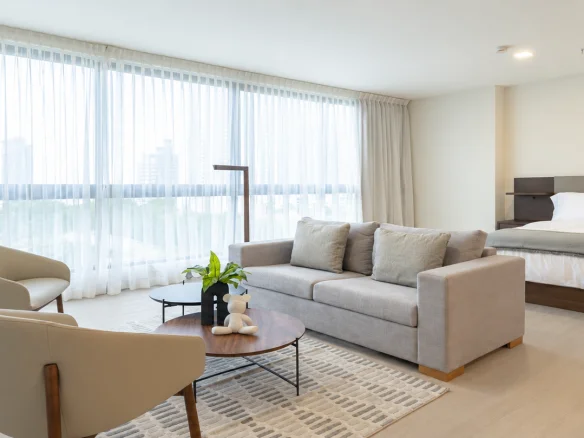
Corporate rental vs residential lease investment is a choice between two ways to earn from the same property. A furnished apartment may collect a higher rate during a corporate assignment, but it must also cover furniture, utilities, service, marketing, and gaps between stays. A residential lease can offer steadier collections with fewer operating tasks. The useful question is which model leaves the owner more income after its full costs and risks.
Direct answer: A corporate rental can outperform a traditional residential lease when a property has verified extended-stay demand and its higher collected revenue exceeds furnishing, utilities, management, cleaning, and vacancy costs. A residential lease can win when corporate bookings fall short or service costs rise. Compare both options for the same property over a full year, then calculate the break-even paid occupancy.
Corporate rental vs residential lease investment: the side-by-side view
A corporate rental is generally a professionally managed, fully furnished home for temporary stays, often longer than 30 days, according to the Corporate Housing Providers Association. A traditional residential lease usually commits one household to a longer rental term. Actual lease lengths and legal treatment vary by place. This comparison concerns the owner’s economics, not what the guest or tenant pays for convenience.
Operating-model comparison for the same property
| Investor question | Corporate rental | Traditional residential lease |
|---|---|---|
| Product and term | Furnished, equipped home; temporary stays or an operator agreement | Usually a longer lease; furnishing and utilities depend on the contract |
| Income pattern | Rate × paid nights; renewals and booking gaps matter | Contracted rent while the tenant pays; vacancy between leases matters |
| Owner-funded costs | Potential furnishing, utilities, internet, cleaning, distribution, service, replacement reserves | Potential leasing fees, management, repairs, make-ready costs; contract allocates utilities |
| Management | Pricing, sales channels, guest support, inspections, and frequent reporting | Tenant screening, rent collection, maintenance, and lease renewal |
| Main risk | Paid occupancy and achieved rate may miss the plan; contracts can shift that risk | A vacancy, nonpayment, or an unfavorable renewal can affect a long period |
| Best fit | Verified assignment or relocation demand and capacity for professional operations | Strong resident demand and preference for a simpler operating plan |
Neither column guarantees income. A company may book a unit for an employee without signing a fixed lease with its owner. Conversely, an operator may lease the unit at fixed rent and take booking risk itself. Ask who signs, who pays, what triggers payment, and who bears an empty month before comparing quoted figures. For the foundations of the model, see how corporate housing investment works for owners.
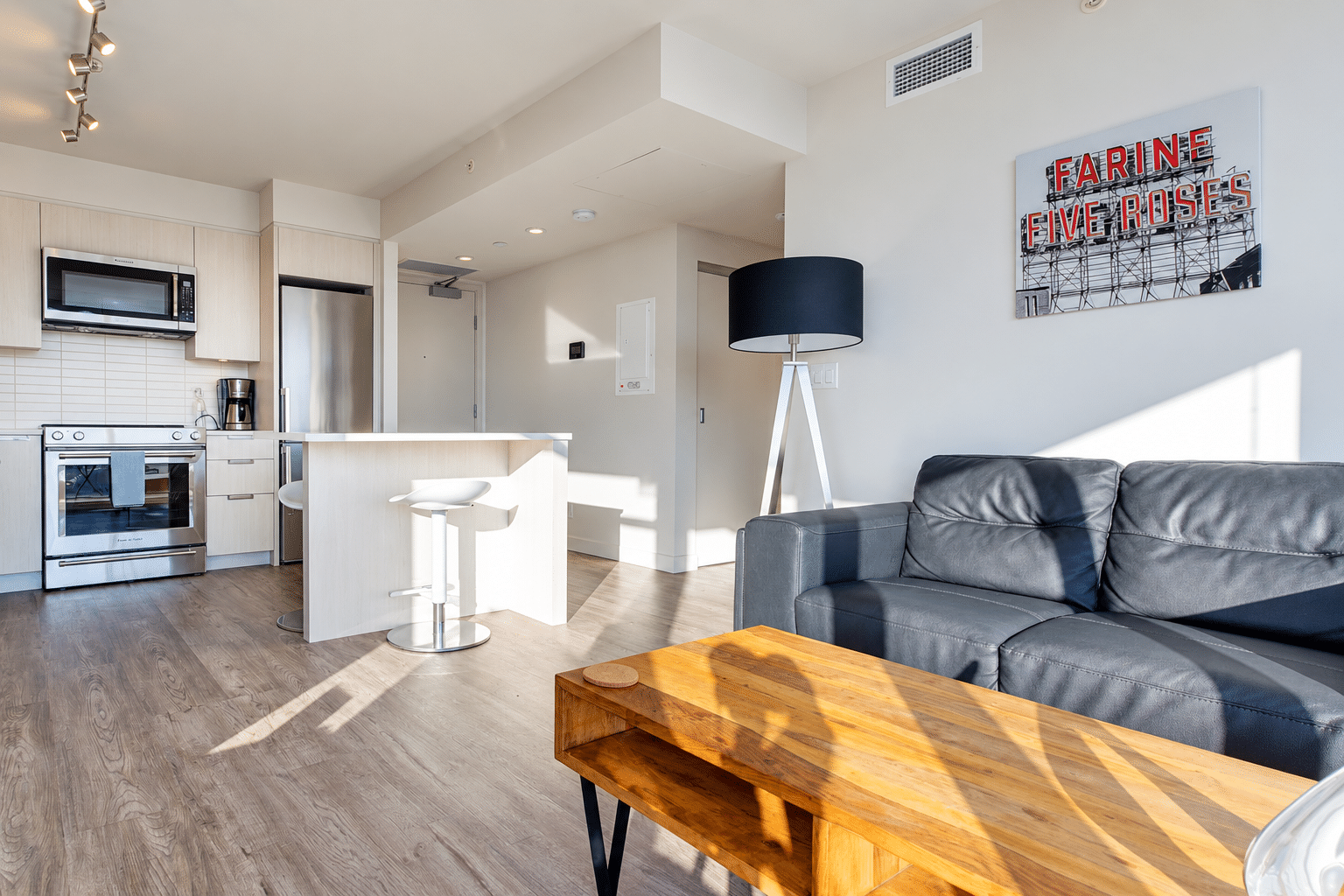
Which model pays more after costs? A worked owner example
Imagine one property that could legally operate under either model. The table covers one full year in hypothetical US dollars. It assumes a residential lease at US$2,400 per month with 11.5 paid months. The furnished option sells 285 nights at US$150 per night through eight extended stays. A 20% corporate fee bundles management and distribution; the lease side uses an 8% management fee. These figures are arithmetic assumptions, not market prices, CS Realty performance, or promised results.
Illustrative annual operating result for one property, US dollars
| Line item | Corporate rental | Residential lease |
|---|---|---|
| Paid use | 285 of 365 nights (78.1%) | 11.5 of 12 months (95.8%) |
| Collected rent / booking revenue | 285 × US$150 = US$42,750 | 11.5 × US$2,400 = US$27,600 |
| Management and distribution | −US$8,550 (20%) | −US$2,208 (8%) |
| Utilities and internet | −US$2,400 | US$0 owner-paid assumed |
| Turnover cleaning / lease make-ready | −US$1,200 (8 × US$150) | −US$800 |
| Furniture replacement reserve | −US$1,800 | US$0 assumed |
| Taxes, insurance, repair allowance | −US$6,000 assumed | −US$6,000 assumed |
| Illustrative annual operating result | US$22,800 | US$18,592 |
The corporate option leads by US$4,208 in this example. That result depends heavily on securing 285 paid nights at the assumed rate. The calculation does not deduct initial furniture purchases, purchase price, transaction costs, debt service, income taxes, depreciation, capital improvements, or sale costs. Insurance and repairs may also differ between models in a real property. To compare yield, divide an appropriately calculated annual net operating income by the full property cost, including setup, and use the same basis for both models. For cash flow, include financing and other owner cash outflows separately. The hospitality management returns guide explains the operating layers in more detail.
The break-even test: how many paid nights does corporate housing need?
In this illustration, each additional paid corporate night contributes US$120 after the assumed 20% fee (US$150 × 80%). The other corporate costs total US$11,400 for the year: utilities US$2,400, eight cleans US$1,200, a furniture reserve US$1,800, and common carrying costs US$6,000. To exceed the residential result of US$18,592, the corporate plan therefore needs at least 250 paid nights, or about 68.5% paid-night occupancy, under those unchanged assumptions.
Illustrative break-even
(US$18,592 + US$11,400) ÷ US$120 ≈ 250 paid nights
At 240 paid nights, the corporate operating result falls to US$17,400, below the residential lease. At 250 paid nights it reaches US$18,600, only US$8 above. This is a narrow mathematical threshold, not a safe target. A lower achieved rate, extra cleaning, a larger fee, or more expensive utilities pushes it higher. The eight-stay assumption is held constant for this sensitivity; a different number of stays changes cleaning cost. Check a property’s actual booking length and paid occupancy together, as explained in the corporate stay-length guide.
What the furnished apartment vs traditional rental calculation can miss
Upfront capital: The corporate unit may need furniture, linens, kitchenware, a work area, and setup time before its first booking. An annual replacement reserve helps plan for wear but does not pay back the initial investment in the table above. Compare the after-tax cash invested and a realistic payback period before calling a higher annual operating result a better investment.
Contract structure: A fixed master lease with an operator, a property-management agreement based on actual bookings, and a direct agreement with a company are different products. A quoted “monthly corporate rent” may be the owner’s contracted payment or merely projected guest revenue. Check cancellation rights, remittance timing, owner use, maintenance approvals, damage rules, and counterparty credit.
Location and demand: A well-equipped unit still needs a credible source of extended assignments, relocations, or other permitted temporary stays. Ask for dated comparable results rather than relying on a broad business-travel trend. A resident rental can also perform well if local households want the location and lease price. Evaluate the same unit under both models, including slower periods.
Rules and taxes: Local law, building rules, licensing, insurance, and tax treatment may change with stay duration and operating structure. The IRS’s 2025 Publication 527 discusses rental income, expenses, and depreciation for relevant U.S. taxpayers; it is not a guide to another country’s tax rules. Get local legal, tax, and insurance advice before using a model. CS Realty’s investment-ready property checklist covers rental permission and operating diligence.
How to choose for a specific property
- Verify permitted use: Confirm the allowed minimum stay, building rules, leases, and insurance for both options.
- Price each model locally: Obtain comparable achieved rents or rates, not only advertised listings, and include seasonality and collection risk.
- List every owner cost: Include furniture, service, management, utilities, vacancy, repairs, taxes, insurance, reserves, and transaction costs.
- Stress the plan: Reduce paid nights and the corporate rate; allow a lease vacancy or nonpayment event. See where one result overtakes the other.
- Read the agreement: Determine whether the owner receives fixed rent or a share of actual bookings and who bears each expense.
CS Realty’s managed-property approach can help an investor evaluate furnishing, operations, guest coordination, maintenance, and reporting. The comparison still needs property-level numbers and the proposed management terms. Ask for those before choosing a model or projecting a return.
The investor takeaway
Corporate rental vs residential lease investment has no universal winner. In the worked example, corporate housing earns more at 285 paid nights, but the residential lease catches up when furnished occupancy falls to about 250 nights under the stated assumptions. Higher potential revenue is useful only when it survives setup, service, vacancy, and contract costs. Choose using evidence from the property’s market and the owner’s actual agreement.
Compare the Models for Your Property
Ask CS Realty for a property-level comparison of corporate rental and residential leasing assumptions, costs, and owner income. Include the property and market you are considering.
Frequently Asked Questions
Is a corporate rental always more profitable than a long-term lease?
No. It may collect more per paid night but also needs enough paid nights to cover its extra setup and service costs. Compare annual owner income for the same unit under both models.
What occupancy does a corporate rental need to beat a residential lease?
There is no general percentage. Divide the residential option’s net operating result plus the corporate option’s fixed and assumed service costs by the contribution per paid night. In this article’s hypothetical example, the threshold is about 250 paid nights, or 68.5% of a 365-night year.
Does a corporate booking guarantee the owner rent?
No. The owner’s right to payment depends on the contract. A fixed lease to an operator, a booking-based management agreement, and a company booking expose the owner to different vacancy and counterparty risks.
Is a furnished apartment cheaper to run with longer stays?
Longer stays can mean fewer turnovers per paid night, but they may require utilities, internet, mid-stay service, furnishing replacements, and discounts. Measure the total cost for the actual booking pattern.
Can an owner switch between corporate and traditional leasing?
Sometimes, but current leases, building rules, local law, permits, insurance, and furnishing costs may limit the switch. Review these before assuming the property can change models quickly.