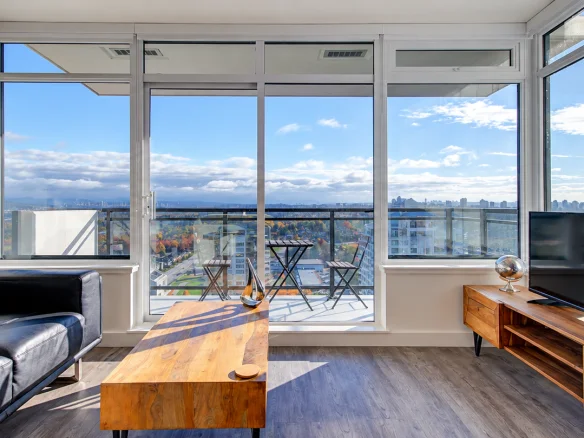
Corporate housing investment appeals to property buyers who want to serve people staying in a city for work, relocation, or another extended need. A furnished apartment can earn a higher monthly rate than an unfurnished lease, but it also brings added costs and periods without a booking. The useful question is not “How high is the rent?” It is “What remains after occupancy and operating expenses?”
Direct answer: Corporate housing is professionally managed, fully furnished accommodation for temporary stays, typically longer than 30 days. Investors own or control the property while an operator may handle marketing, bookings, guest support, cleaning, and maintenance. Income depends on local demand, paid occupancy, pricing, costs, and the management agreement; higher advertised rent does not guarantee a higher return.
What is corporate housing?
Corporate housing gives a guest a ready-to-live-in home for a temporary assignment or transition. According to the Corporate Housing Providers Association (CHPA), it covers professionally managed furnished apartments, houses, and similar residences, usually for stays longer than 30 days. Furniture, housewares, utilities, and other practical essentials are typically part of the offer.
The name can be misleading. Guests may include employees on assignment, relocating professionals, project teams, and people temporarily displaced from their homes. The person staying and the organization paying may be different. In some cases, the guest books directly and seeks reimbursement; in others, an employer or relocation provider signs the agreement.
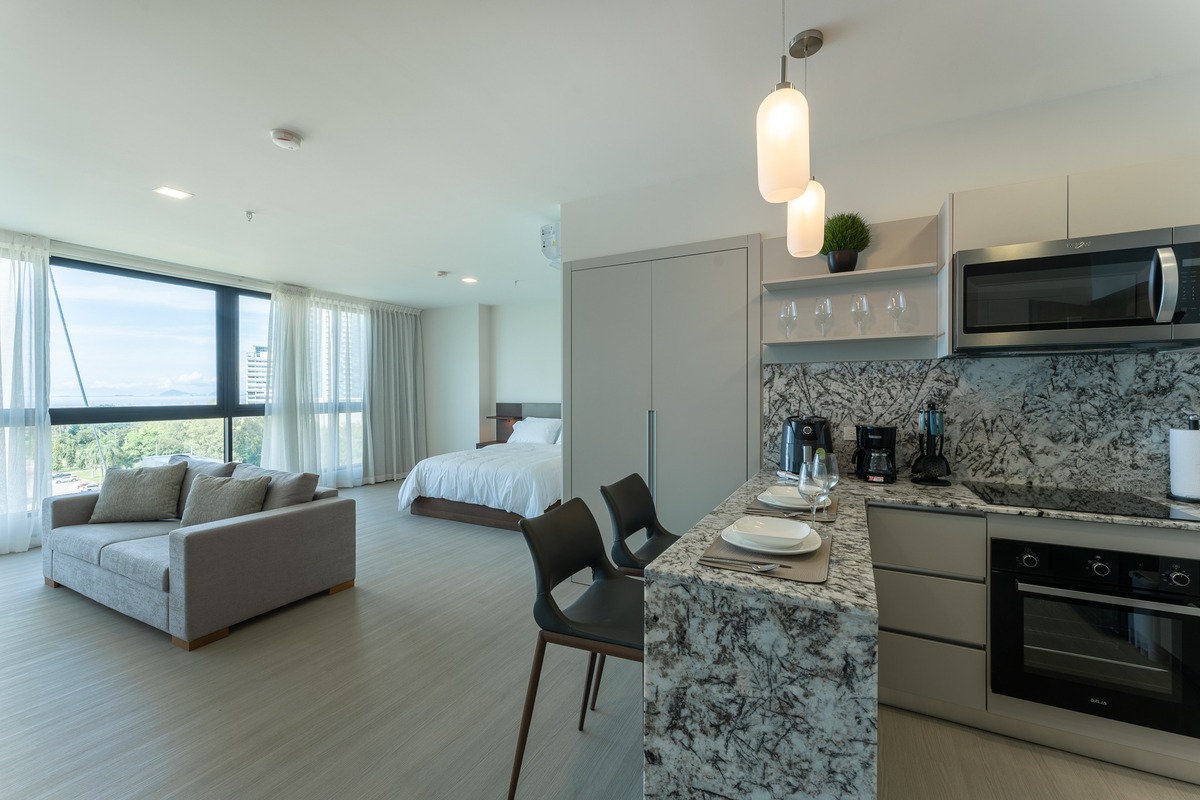
For an investor, the property is only one part of the product. Reliable internet, a functional kitchen, comfortable furniture, clear billing, dependable support, and the right location can matter as much as the floor plan. A corporate rental competes on the quality of the whole stay.
How does a corporate housing investment work?
An owner can buy a suitable unit and arrange for a specialist to furnish and operate it, or acquire an investment property already prepared for this use. The exact setup varies by property and agreement. A typical process looks like this:
- 1. Check demand and permitted use. Identify the likely guest, nearby demand drivers, competing accommodations, building rules, and minimum stay requirements.
- 2. Prepare the unit. Budget for furniture, housewares, reliable internet, safety equipment, photography, and any required approvals.
- 3. Choose the operating model. Decide who prices the unit, sources bookings, checks occupants, handles invoicing, arranges cleaning, and approves repairs.
- 4. Run and review it. Compare actual paid occupancy, collected revenue, costs, and guest feedback with the original investment case.
Some arrangements pay the owner rent under a fixed lease with an operator. Others share actual booking revenue after fees and costs. Those structures expose the owner to different levels of vacancy and counterparty risk, so read the agreement before treating any quoted income as predictable.
Why do investors consider corporate housing?
Demand for a ready-to-use home
A guest on a multiweek assignment may value a kitchen, laundry access, workspace, and room to settle in. That can make a well-equipped residence attractive when a hotel room is impractical for the length of stay. The fit depends on the employer’s travel policy and the property’s location and price.
Business travel is a useful signal, but broad spending figures cannot prove demand for one apartment. The Global Business Travel Association’s 2026 forecast projects US$1.71 trillion in worldwide business travel spending in 2026. GBTA also says price increases account for part of the spending growth. An investor still needs local evidence of suitable extended-stay guests, competing supply, and attainable rates.
Flexible pricing with a different cost base
A furnished unit can sometimes charge a higher monthly amount because the price includes more than the space itself. The owner may also pay for utilities, internet, furnishings, cleaning, guest service, and more active management. The premium matters only when it covers those added costs and any gaps between stays.
Investor’s operating question
Does the rental premium cover the full cost of delivering the stay?
Professional operations for remote owners
An experienced operator can coordinate marketing, reservations, service, maintenance, and reporting. CS Realty describes an investment approach that connects selected properties with Corporate Stays’ furnished-apartment operations. The scope, fees, and owner responsibilities must still be confirmed for the specific property. Owners should continue to review reports, fund reserves, and approve major decisions.
Corporate housing investment vs a traditional rental
The comparison below describes common differences. Neither column is a promise about occupancy or returns.
| Factor | Corporate housing | Traditional long-term rental |
|---|---|---|
| Setup | Fully furnished and equipped | Often rented unfurnished |
| Stay pattern | Temporary, often for weeks or months | Longer fixed lease term |
| Pricing | Can change with demand and stay length | Generally fixed during a lease |
| Included services | Often utilities, internet, cleaning between stays, and guest support | Usually fewer included services |
| Owner exposure | More operating costs and booking gaps unless the operator takes that risk | Potential vacancy at lease end, usually less frequent turnover |
| Key test | Net income after realistic occupancy and full service costs | Net income after lease vacancy and property costs |
An illustrative net-income comparison
Assume the same hypothetical property could earn US$2,000 a month on a year-long lease, or US$3,200 for each occupied month as furnished corporate housing. Assume a full 12 months of paid rent for the long-term lease and 10 paid months for corporate housing. The numbers below are examples for the calculation, not market quotes or CS Realty projections.
| Calculation | Traditional lease | Corporate housing |
|---|---|---|
| Paid months | 12 | 10 |
| Rent per paid month | US$2,000 | US$3,200 |
| Annual rental revenue | US$24,000 | US$32,000 |
| Assumed annual operating costs | US$7,000 | US$13,000 |
| Net operating income | US$17,000 | US$19,000 |
Assumptions: Operating costs include estimated property charges, insurance, routine maintenance, management, and an allowance for the extra utilities, cleaning, and furniture replacement involved in corporate housing. Actual contracts allocate these expenses differently. Net operating income (NOI) means revenue minus normal operating expenses, before loan payments, income taxes, and depreciation. The upfront cost of buying and furnishing the unit is also excluded; add it to the total investment when calculating your yield.
Occupancy changes the result
Here is the important sensitivity check: at nine paid corporate months, the same assumptions produce US$15,800 of NOI, below the US$17,000 long-term case. To exceed US$17,000, the unit needs more than 9.375 paid months at US$3,200 per month with US$13,000 in annual costs, or at least 10 full paid months in this simplified example. Ten months means about 83% calendar occupancy. Test lower prices, higher costs, and longer gaps before relying on the higher-revenue scenario.
For a deeper explanation of NOI and pricing, see CS Realty’s guide to hospitality property management returns.
How to evaluate a property before investing
A corporate rental needs a specific demand case, not just a city with office buildings. Ask for evidence that matches the size, location, and quality of the proposed unit:
Property evaluation checklist
- Guest sources: Which employers, relocation programs, project teams, or other extended-stay users are active nearby?
- Comparable offers: What do similar furnished units actually charge, and what is included at that price?
- Paid occupancy: How many nights or months are likely to be paid for across a full year? What supports that assumption?
- Total setup cost: What will purchase, closing, furnishing, licensing, and initial reserves require?
- Operator terms: Who pays utilities, cleaning, repairs, marketing fees, and replacements? Who receives deposits and controls the booking data?
- Plan B: Could the unit work as a conventional rental or be sold if corporate demand weakens?
If you are considering a prepared property, CS Realty’s turnkey investment property guide explains what to confirm before treating a unit as ready to operate. The post-purchase guide covers the handover and reporting stage.
Risks and mistakes to account for
- Overestimating demand: A global travel forecast does not establish local corporate bookings. Seek property-level evidence.
- Comparing gross rents: A furnished premium can disappear after management, utilities, cleaning, booking gaps, and furniture replacement.
- Assuming a company guarantees payment: Confirm who signs, who pays, credit terms, cancellation rights, and what happens if the occupant leaves early.
- Overlooking rules: Rental permissions, building bylaws, insurance, licensing, and tax treatment vary by location and length of stay. Ask qualified local advisers to verify the intended use.
- Underfunding reserves: Guest expectations and repeated use can bring unplanned repairs or replacements.
- Ignoring the exit: Consider market liquidity, currency exposure for international purchases, and whether the unit remains attractive to local long-term renters or buyers.
Is a corporate housing investment right for you?
A corporate housing investment can make sense when a property meets verified extended-stay demand, is legally suitable, and produces enough income after its added services and vacancy. The strongest case is one you can explain with local comparables, a documented operating plan, and a conservative net-income scenario. Some properties will suit a conventional lease better.
Ready to Compare the Two Rental Models?
Ask CS Realty for a Corporate Housing ROI vs Traditional Rental comparison and review the operating assumptions for the property you are considering.
Frequently Asked Questions
Is corporate housing the same as a vacation rental?
No. Corporate housing typically serves temporary residential needs over longer stays, while vacation rentals often focus on shorter leisure trips. Both can be furnished, but their guest needs, operating patterns, and legal treatment may differ by location.
Do I need a corporation to invest in corporate housing?
Not necessarily. The term describes the accommodation and its users, not a universal ownership structure. The best way to hold a property depends on your jurisdiction and circumstances; seek local legal and tax advice.
Does a corporate tenant guarantee occupancy?
No. Even a property near employers may have gaps between assignments. If an operator offers a fixed lease, evaluate the operator’s payment obligations and financial strength separately from guest demand.
Can an owner manage a corporate rental from another country?
Yes, with a capable local team and a clear agreement, but remote ownership still requires oversight. Review the reports, cash distributions, maintenance approvals, insurance, and local compliance.
How do I know whether corporate housing will outperform a normal lease?
Model both strategies for the same property using credible local rates, realistic occupancy, complete operating costs, and the full cash invested. A higher furnished rate alone does not answer the question.